Selecting the right cellulose ether is often the invisible deciding factor between a construction material that fails under stress and one that maintains structural integrity for decades. Whether it is the water retention in a skim coat or the stability of a high-viscosity detergent, the chemical precision of these non-ionic polymers dictates the final performance of the end product.
The market has shifted from generic thickening agents to application-specific grades. Professionals now require materials that offer precise rheological control, enzyme resistance, and high suspension rates to meet modern building codes and consumer expectations in the cosmetics and detergent sectors.
For those looking to buy cellulos ether, understanding the intersection of chemical processing—such as the liquid phase reaction method—and practical site requirements is essential for optimizing cost and quality.


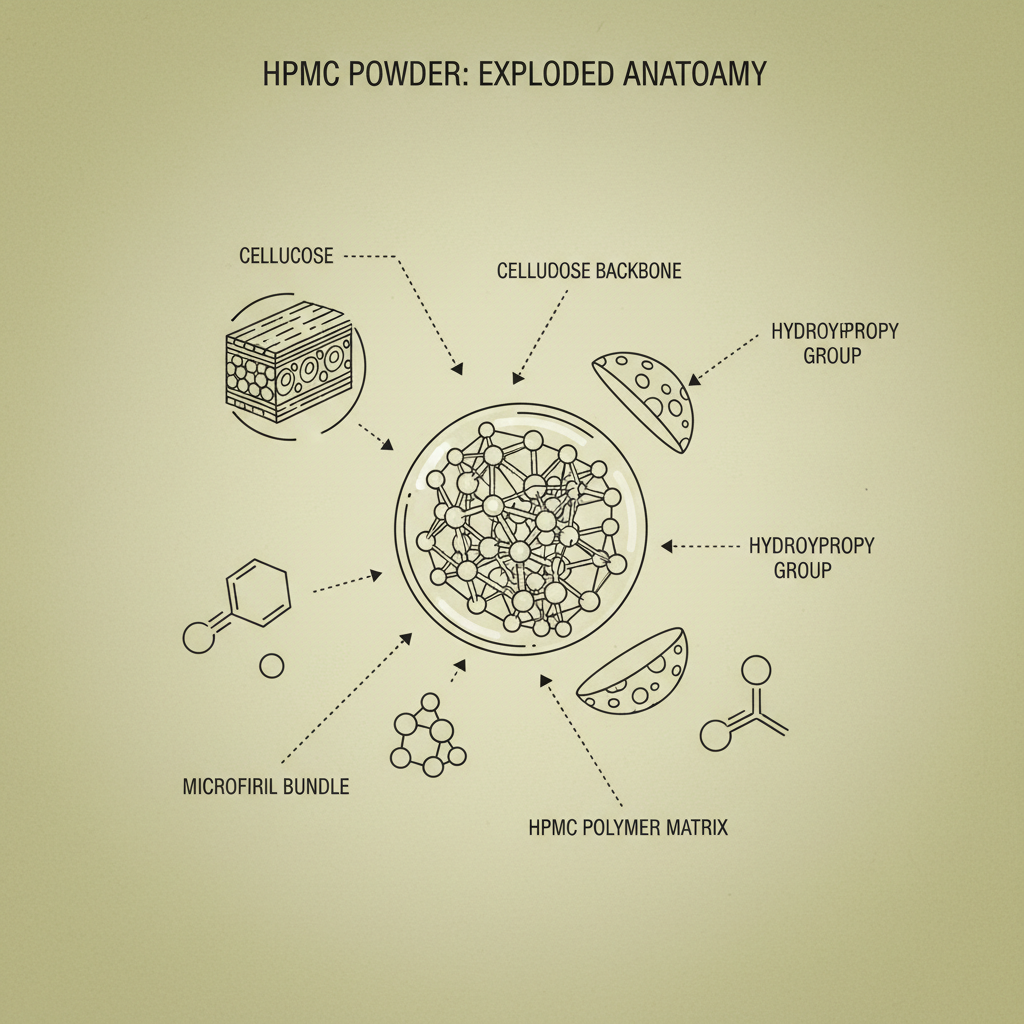
Hydroxypropyl methyl cellulose (HPMC) is derived from natural polymer materials. Through a rigorous series of chemical processing steps, it is converted into a non-ionic cellulose ether. This chemical nature allows it to remain stable across various pH levels and be compatible with a wide array of other additives.
Unlike simple thickeners, HPMC combines the performance characteristics of methyl cellulose (MC) while providing enhanced solubility and stability. This makes it a primary choice for high-quality building material additives and fine chemical formulations.
The primary value of cellulose ethers in construction and cosmetics lies in their ability to control water. In cement-based mortars, HPMC prevents the rapid absorption of water into the substrate, ensuring that the cement hydrates fully. This prevents shrinkage cracks and improves the overall bond strength of tile adhesives and wall putties.
Beyond water retention, the rheological properties—specifically the ability to maintain stability at different shear rates—are critical. For water-based paints and coatings, this means the product flows smoothly during application (low viscosity under high shear) but does not sag or drip once applied to the wall (high viscosity under low shear).
In the personal care sector, these polymers act as stabilizers and emulsifiers in shampoos and soap liquids, ensuring that active ingredients remain suspended and the texture remains consistent regardless of temperature fluctuations.
The quality of HPMC is fundamentally tied to the reaction technology used during production. Traditional methods often result in inconsistent substitution degrees, leading to batches that vary in viscosity or solubility.
The adoption of advanced liquid phase reaction kettle technology allows for more precise control over the etherification process, ensuring a uniform molecular distribution and consistent non-ionic properties across large-scale production.
Such technological rigor is often validated through ISO9001 Quality System Certifications. For procurement officers, the manufacturing method is a leading indicator of whether the product will perform consistently in sensitive applications like hand sanitizers or high-performance skim coats.
Different industrial applications require distinct performance profiles. A grade designed for detergent HPMC focuses more on enzyme resistance and stability in alkaline environments, whereas construction-grade HPMC prioritizes water retention and open time for mortar application.
The following relative index demonstrates how the importance of specific properties shifts depending on the end-use category.
In a typical industrial setting, such as the production of dry-mix mortar, the addition of HPMC transforms the material's workability. By improving the slip resistance of tile adhesives, it allows installers to place heavy tiles on vertical walls without them sliding down, directly impacting labor efficiency and project timelines.
Similarly, in the manufacture of water-based paints, the emulsification effect of cellulose ethers ensures that pigments are evenly dispersed. This prevents "streaking" and improves the leveling properties of the paint, allowing for a smooth, professional finish that is resistant to peeling.
The industry is moving toward "smart" additives that respond to specific environmental triggers. There is an increasing demand for ethers that can maintain high viscosity in high-temperature environments, particularly for oil drilling and specialized industrial coatings.
Sustainability is also driving a shift toward natural polymer raw materials processed with fewer hazardous solvents. The focus is now on increasing the "bio-compatibility" of the product, especially for detergent-grade and hand sanitizer HPMC, where skin sensitivity is a primary concern.
Finally, the integration of RDP-VAE (Redispersible Polymer Powder) alongside HPMC has become the standard for high-end construction materials. This synergy allows for a balance between flexibility, adhesion, and water retention that neither product could achieve alone.
When deciding where to buy cellulos ether, buyers should move beyond price-per-kilogram and evaluate the total system cost. A cheaper, low-grade ether may require higher dosage levels to achieve the same water retention, effectively increasing the cost per project.
Key evaluation factors include the viscosity grade, the purity of the non-ionic cellulose, and the manufacturer's ability to provide consistent batches. For construction materials, checking the compatibility with cement and gypsum plaster is non-negotiable.
The following framework provides a relative suitability guide for matching HPMC grades to specific industrial requirements.
| Application Grade | Primary Requirement | Key Performance Metric | Relative Suitability |
|---|---|---|---|
| Construction Grade | Water Retention | Open Time / Sag Resistance | High |
| Coating Grade | Rheology Control | Leveling / Anti-peeling | High |
| Detergent Grade | Alkali Stability | Enzyme Resistance | Medium-High |
| Cosmetic Grade | Texture/Purity | Suspension Rate | High |
| Tile Adhesive | Bond Strength | Slip Resistance | Essential |
| Oil Drilling | Thermal Stability | Viscosity Retention | Specialized |
Non-ionic cellulose ethers, such as HPMC, do not carry an electrical charge. This makes them exceptionally stable when mixed with other ionic surfactants or electrolytes, which is why they are preferred in detergents and cosmetics. Unlike organic thickeners, they offer a unique combination of water retention, film-forming abilities, and thermal gelation, providing structural stability that simple polymers cannot match.
The liquid phase reaction kettle allows for more homogeneous mixing and precise temperature control during the etherification of cellulose. This results in a more uniform distribution of methyl and hydroxypropyl groups across the cellulose chain. For the end-user, this means more predictable viscosity, better solubility, and the elimination of "fish-eyes" (undissolved clumps) during the mixing process in construction or paint applications.
While both use construction-grade HPMC, wall putty requires a grade that emphasizes smooth leveling and high water retention to prevent the putty from drying too quickly. Tile adhesives, however, require a grade with higher "tack" and superior slip resistance to hold heavy tiles in place. Always verify the viscosity and the specific "open time" characteristics when selecting between these two application types.
HPMC is specifically designed for water-based systems. Its molecular structure allows it to interact with water molecules to create viscosity and retention. In oil-based systems, it will not dissolve or provide the intended thickening effect. For oil-based applications, different chemical modifiers or hydrophobic cellulose derivatives would be required, though HPMC remains the gold standard for water-borne coatings and mortars.
Common indicators of poor-quality HPMC include excessive shrinkage cracks in mortar, "sagging" of paint on vertical surfaces, or phase separation in detergents. If a product requires an unusually high amount of additive to reach the desired viscosity, or if the viscosity drops sharply over a short period, it often points to an inconsistent substitution degree or impurities in the cellulose ether.
ISO9001 certification ensures that the manufacturer follows a standardized quality management system. In the chemical industry, this is critical because cellulose ether production is sensitive to raw material purity and reaction timing. Certification provides a level of trust that each batch will meet the specified viscosity and purity standards, reducing the risk of production downtime caused by material variability.
The transition from generic chemicals to precision-engineered additives is redefining the standards of the fine chemical industry. By focusing on the technical nuances—from the liquid phase reaction method to the specific rheological requirements of the end application—manufacturers can significantly enhance the durability and efficiency of their products.
Ultimately, the decision to buy cellulos ether should be guided by a balance of technical certification, application-specific grading, and a deep understanding of how these polymers interact within a complex chemical system.