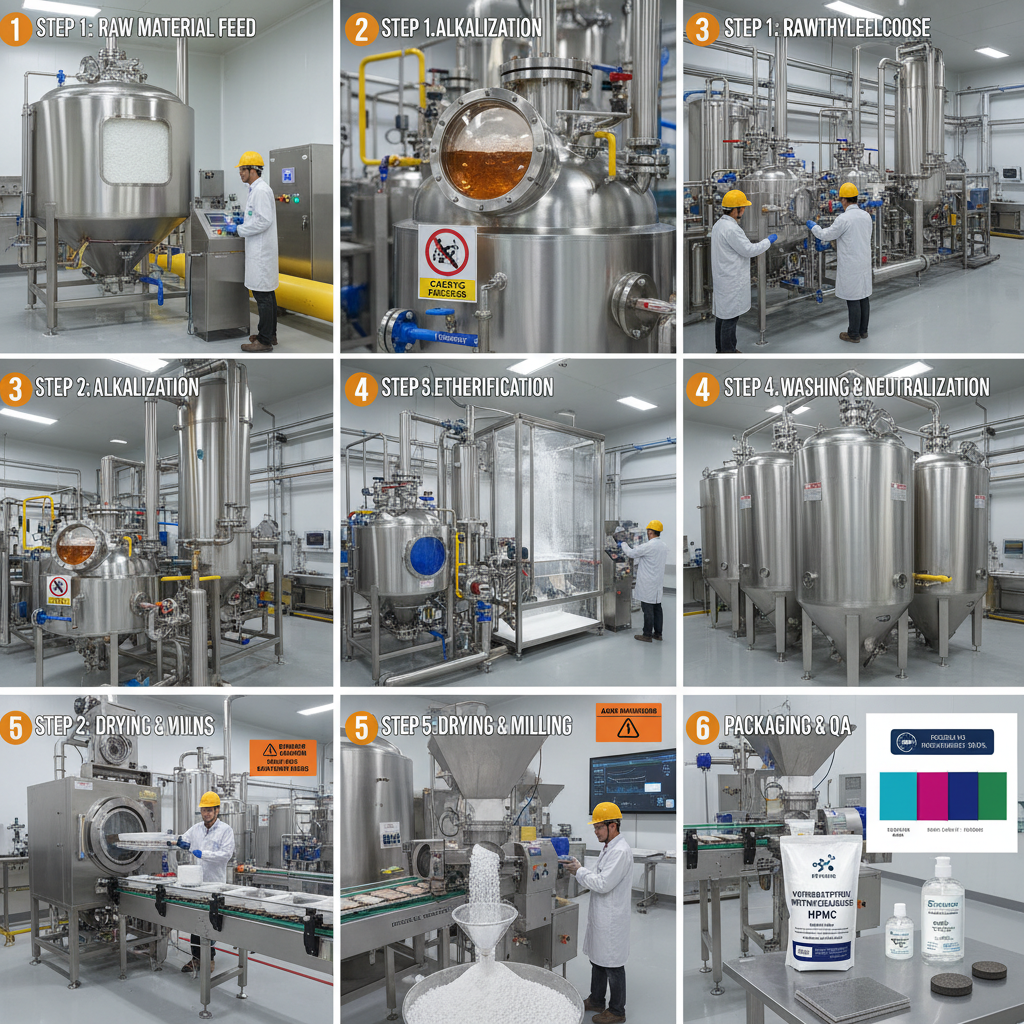


For procurement managers in the fine chemicals industry, the decision to buy hpmc involves balancing chemical purity with specific application performance. Hydroxypropyl Methyl Cellulose (HPMC) serves as a critical additive across construction, paints, and personal care, where its water-retention and thickening properties directly impact the quality of the final product.
The primary challenge when sourcing HPMC is avoiding the mismatch between the grade of the polymer and the actual industrial requirement. Using a detergent-grade cellulose in a construction mortar, for instance, can lead to premature cracking or poor adhesion, resulting in significant material waste and structural risks.
This guide provides a professional framework for evaluating HPMC specifications, matching product grades to industrial applications, and establishing a rigorous supplier qualification process to ensure consistent material performance.

Understanding HPMC Grade Specifications

When you buy hpmc, the most critical technical parameter is the viscosity grade. Viscosity determines the thickness of the solution and the stability of the suspension. In the specialized chemical manufacturing sector, HPMC is categorized by its molecular weight and substitution degree, which dictate how the polymer interacts with water and other additives.
For construction-grade materials, high viscosity is often required to prevent sediment slurry from separating during pump-delivery. Conversely, in the paint and coating industry, a more balanced viscosity is necessary to ensure a smooth finish without compromising the dispersant properties of the mixture.
Matching Cellulose Grades to Industry Needs
Industrial applications require tailored cellulose chemistry. Construction Grade HPMC is engineered for water retention, ensuring that mortar does not crack after smearing and enhancing strength after hardening. This is essential for tile adhesives and putty powders where open time is critical for installation quality.
In personal care, such as shampoo or soap liquid HPMC, the focus shifts toward transparency, skin feel, and stability. For the paint industry, the material acts as a stabilizer and thickener, ensuring that pigments remain evenly dispersed in either water-based or organic solvent systems, while also serving effectively as a paint stripping agent in specific formulations.
Technical Role of HPMC in Formulation
From a chemical engineering perspective, HPMC (CAS No. 9004-65-3) functions as a non-ionic cellulose ether. Its primary value lies in its ability to form a protective film around water molecules, which retards the evaporation process. In gypsum materials and plaster, this extends the operation time, allowing workers to apply the material with higher precision.
Beyond construction, HPMC is utilized in the plastics industry as a forming release agent, lubricant, and softening agent. This versatility stems from its compatibility with various solvents and its ability to modify the rheological properties of the medium without altering the core chemical identity of the primary product.
Evaluation Framework for Material Performance
To objectively assess the quality of HPMC, procurement teams should utilize a normalized performance index. This conceptual framework evaluates how different grades perform across key functional dimensions, such as water retention, thickening efficiency, and stability. The following chart illustrates a relative comparison of performance priorities by application.
The data suggests that construction-grade HPMC prioritizes water retention and stability to prevent shrinkage, whereas coating-grade HPMC emphasizes thickening and miscibility to ensure uniform coverage. This illustrative framework helps buyers determine which technical specifications to prioritize during the sampling phase.
Risk Mitigation in Bulk Procurement
The risk of batch-to-batch inconsistency is the most significant concern when you buy hpmc in large volumes. Variations in the degree of substitution can lead to unpredictable solubility and viscosity shifts, which can ruin an entire production run of tile adhesive or detergent.
To mitigate these risks, buyers should implement a three-step validation process: first, verifying the Certificate of Analysis (CoA) against the specific project requirements; second, conducting laboratory-scale compatibility tests with existing binders; and third, performing a pilot run to monitor the hardening strength and operation time in real-world conditions.
Common Specification Pitfalls
A frequent error in HPMC procurement is focusing solely on the lowest price per kilogram while ignoring the effective dosage. A high-purity HPMC may have a higher unit cost but requires a lower dosage to achieve the same water retention, potentially reducing the total cost of the final mortar or paint formulation.
Another pitfall is the failure to specify the desired "open time" for construction materials. If the HPMC grade does not provide sufficient water retention for the local climate's humidity and temperature, the slurry will dry too quickly, leading to poor adhesion and the potential for structural failure in the cured material.
Supplier Comparison Matrix
Choosing a supplier requires a qualitative analysis of their technical capabilities and product range. Whether you need Building Grade, Detergent Grade, or Coating HPMC, the supplier must be able to provide consistent specifications that align with your industry's standards.
| Grade Type | Primary Function | Critical Parameter | Best Application |
|---|---|---|---|
| Construction | Water Retention | Viscosity/Open Time | Tile Adhesive |
| Painting | Thickening | Miscibility | Water-based Paints |
| Detergent | Stabilization | Solubility | Liquid Soaps |
| Plastic | Lubrication | Thermal Stability | Forming Release |
| Plaster | Bind Strength | Workability | Gypsum Putty |
| Pharmaceutical | Controlled Release | Purity Level | Tablet Binders |
This matrix demonstrates that HPMC is not a one-size-fits-all product. Buyers must match the grade to the specific chemical environment of their product to ensure optimal performance and cost-efficiency.
Frequently Asked Questions
Construction grade HPMC is optimized for high water retention and sag resistance in cementitious materials, whereas detergent grade is focused on solubility, stability, and thickening in surfactant-rich environments.
HPMC acts as a water-retention agent, slowing down the evaporation of water from the slurry. This ensures that the cement hydrates properly and uniformly, preventing the shrinkage cracks that occur when water is lost too quickly.
Verify the viscosity range, moisture content, ash content, and pH value. Ensure the viscosity is measured using the same standard (e.g., Brookfield) as your internal quality control tests.
Yes, certain grades of HPMC have good miscibility in both water and some organic solvents, making them useful as stabilizers or thickeners in specialized paint stripping agents and coatings.
Higher quality HPMC increases the open time by retaining moisture in the adhesive layer, allowing the installer more time to adjust the tiles before the adhesive begins to set.
In plastics, HPMC serves as a forming release agent and lubricant, reducing friction during the molding process and preventing the material from sticking to the molds.
Conclusion
Successful procurement of HPMC depends on a deep understanding of the relationship between polymer viscosity and final application performance. By prioritizing the correct grade—whether for construction, coatings, or detergents—and implementing a rigorous technical validation process, manufacturers can ensure product stability and reduce operational waste.
For those seeking specialized HPMC solutions, you can review the available product specifications and application data at www.youngcel.com to match the right grade to your industrial requirements.