



Cellulose for Paints: Enhancing Performance and Sustainability
In the ever-evolving world of coatings and paints, achieving the ideal balance of performance, cost-effectiveness, and environmental responsibility is paramount. Cellulose ethers, derived from sustainable wood sources, are increasingly recognized as vital additives for modern paint formulations. This article explores the diverse benefits of using cellulose for paints, covering its functionalities, applications, and the latest advancements in this field. Understanding these benefits can lead to better paint products and more sustainable practices within the industry.

The Role of Cellulose Ethers in Paint Formulation
Cellulose ethers act as multi-functional additives in paints, significantly influencing their properties. Primarily, they function as thickeners, controlling the viscosity of the paint and preventing pigment settling. They also act as water retention agents, slowing down the evaporation of water during application, leading to improved leveling and open time. Furthermore, they contribute to film formation, enhancing the durability and adhesion of the paint film. Different types of cellulose ethers, such as Hydroxyethyl Cellulose (HEC), Hydroxypropyl Methylcellulose (HPMC), and Carboxymethyl Cellulose (CMC), are selected based on the specific paint type and desired performance characteristics. Youngcel's range of cellulose ethers is specifically engineered to deliver optimal performance in a wide array of paint applications.
Key Benefits: Improved viscosity control, enhanced water retention, better film formation, increased paint stability, and improved application properties.
Applications of Cellulose in Different Paint Types
The versatility of cellulose for paints extends to various paint types, including water-based architectural paints, industrial coatings, and specialty coatings. In architectural paints, cellulose ethers improve brushability, leveling, and hiding power. For industrial coatings, they enhance corrosion resistance and provide a smooth, durable finish. In specialty coatings, such as textured paints and primers, they provide specific functionalities like increased sag resistance or improved adhesion. The correct choice of cellulose ether type and concentration is vital for achieving the desired properties in each application. Youngcel offers tailored solutions for each of these application areas.
Application-Specific Benefits:
• Architectural Paints: Improved brushability and hiding power.
• Industrial Coatings: Enhanced corrosion resistance and durability.
• Specialty Coatings: Tailored functionality (e.g., sag resistance, adhesion).
Cellulose for Paints: A Comparison of Common Types
Different cellulose ether types offer distinct properties, making them suitable for specific paint formulations. Understanding these differences is crucial for optimizing paint performance. The most commonly used types include HEC, HPMC, and CMC. HEC is known for its excellent thickening efficiency and is often used in low-VOC paints. HPMC provides good water retention and film formation properties. CMC is a cost-effective option for improving paint stability and viscosity. Choosing the right cellulose ether depends on factors such as paint chemistry, desired performance characteristics, and cost considerations.
Sustainability and the Future of Cellulose in Paints
The use of cellulose for paints aligns with the growing demand for sustainable and environmentally friendly products. Cellulose is derived from renewable wood sources, making it a bio-based alternative to traditional petroleum-based additives. Youngcel is committed to responsible sourcing and sustainable manufacturing practices. The future of cellulose in paints lies in further innovation, including the development of more efficient and specialized cellulose ethers with enhanced functionalities and reduced environmental impact. This contributes to greener paint formulations and a more sustainable coatings industry.
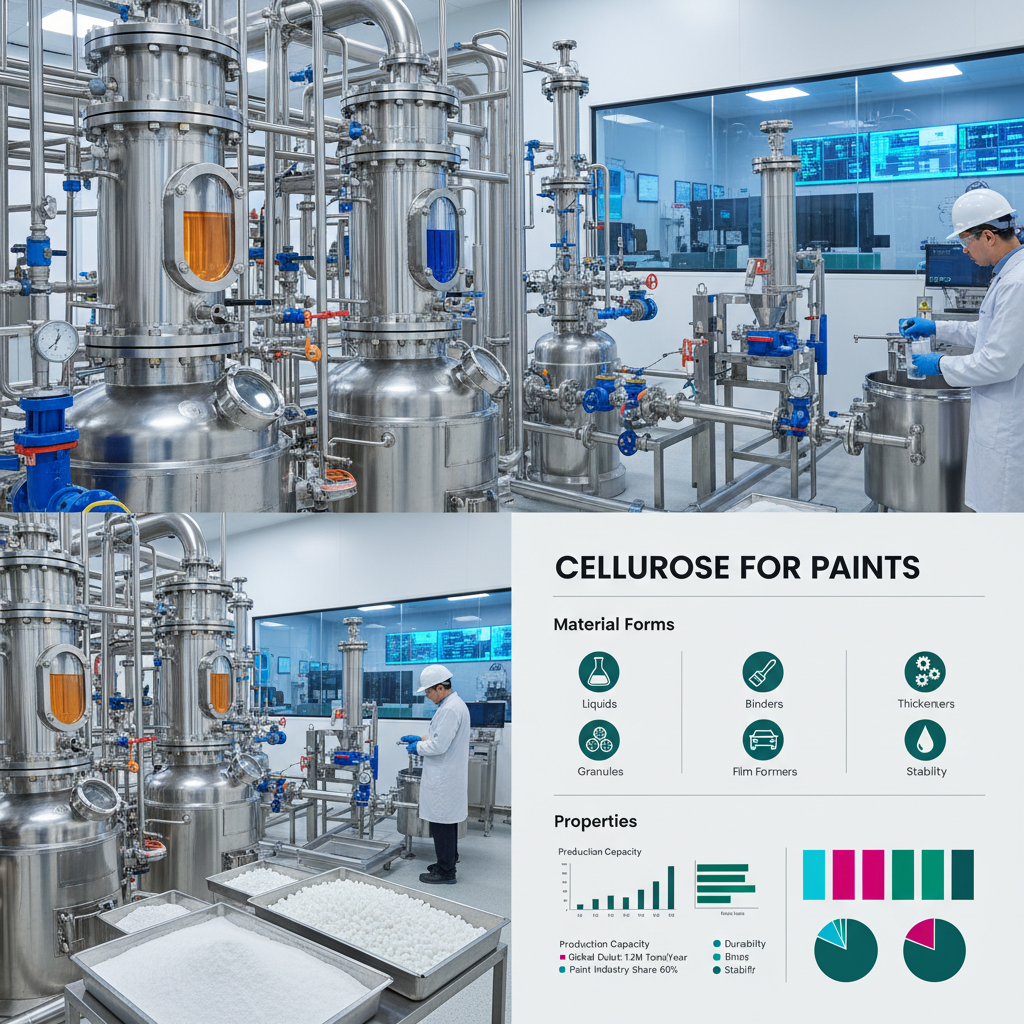
Product Specifications: Youngcel Cellulose Ethers
Youngcel offers a comprehensive range of cellulose ethers tailored for paint applications. Below is a snapshot of some key specifications:
Conclusion: Elevate Your Paint Formulations with Youngcel Cellulose
By incorporating Youngcel's cellulose ethers into your paint formulations, you can achieve superior performance, enhanced sustainability, and cost-effectiveness. Our commitment to quality and innovation ensures that you receive products tailored to your specific needs. Contact us today to learn more about how we can help you optimize your paint formulations.
Frequently Asked Questions (FAQs)
What are the environmental benefits of using cellulose ethers in paints?
Cellulose ethers are derived from renewable wood sources, reducing reliance on petroleum-based chemicals. This makes them a more sustainable choice, lowering the carbon footprint of paint production. Furthermore, Youngcel utilizes responsible sourcing practices and minimizes waste during manufacturing. Choosing cellulose ethers contributes to a circular economy and reduces environmental impact, aligning with growing consumer demand for eco-friendly products.
How does the molecular weight of cellulose ether affect paint properties?
The molecular weight of cellulose ether significantly impacts its thickening efficiency and water retention properties. Higher molecular weight cellulose ethers generally provide greater thickening and water retention, but can also increase viscosity and require higher shear rates for proper mixing. Lower molecular weight cellulose ethers offer better flow and leveling characteristics. Selecting the appropriate molecular weight depends on the desired paint properties and application method.
Can cellulose ethers be used in combination with other paint additives?
Yes, cellulose ethers are often used in combination with other paint additives, such as dispersants, defoamers, and biocides, to achieve optimal performance. They are generally compatible with a wide range of additives, but it is essential to conduct compatibility testing to ensure there are no adverse interactions. Youngcel's technical team can provide guidance on formulating cellulose ethers with other additives.
How should cellulose ethers be dispersed in paint formulations?
Proper dispersion of cellulose ethers is critical to avoid clumping and ensure uniform viscosity. Typically, the cellulose ether is pre-mixed with a small amount of water to form a slurry before being slowly added to the main paint formulation under vigorous agitation. Using a high-shear mixer can help to break down any clumps and ensure complete dispersion. Avoid adding cellulose ether directly to a highly viscous mixture.
-
Industrial Guide to High Performance Ceramic Adhesives UseNewsApr.16,2026
-
Ultimate Guide to Choosing the Right Cement Wall PaintNewsApr.09,2026
-
Comprehensive Guide to Cement Thickeners for Construction and Oil DrillingNewsApr.07,2026
-
Optimizing Construction with Advanced Cement Mortar Additive SolutionsNewsApr.04,2026
-
Understanding Cement Glue for Construction and DIY ProjectsNewsMar.31,2026
-
Effective Cement Dissolver Chemical Solutions for Construction and IndustryNewsMar.28,2026